Behind Barnaby
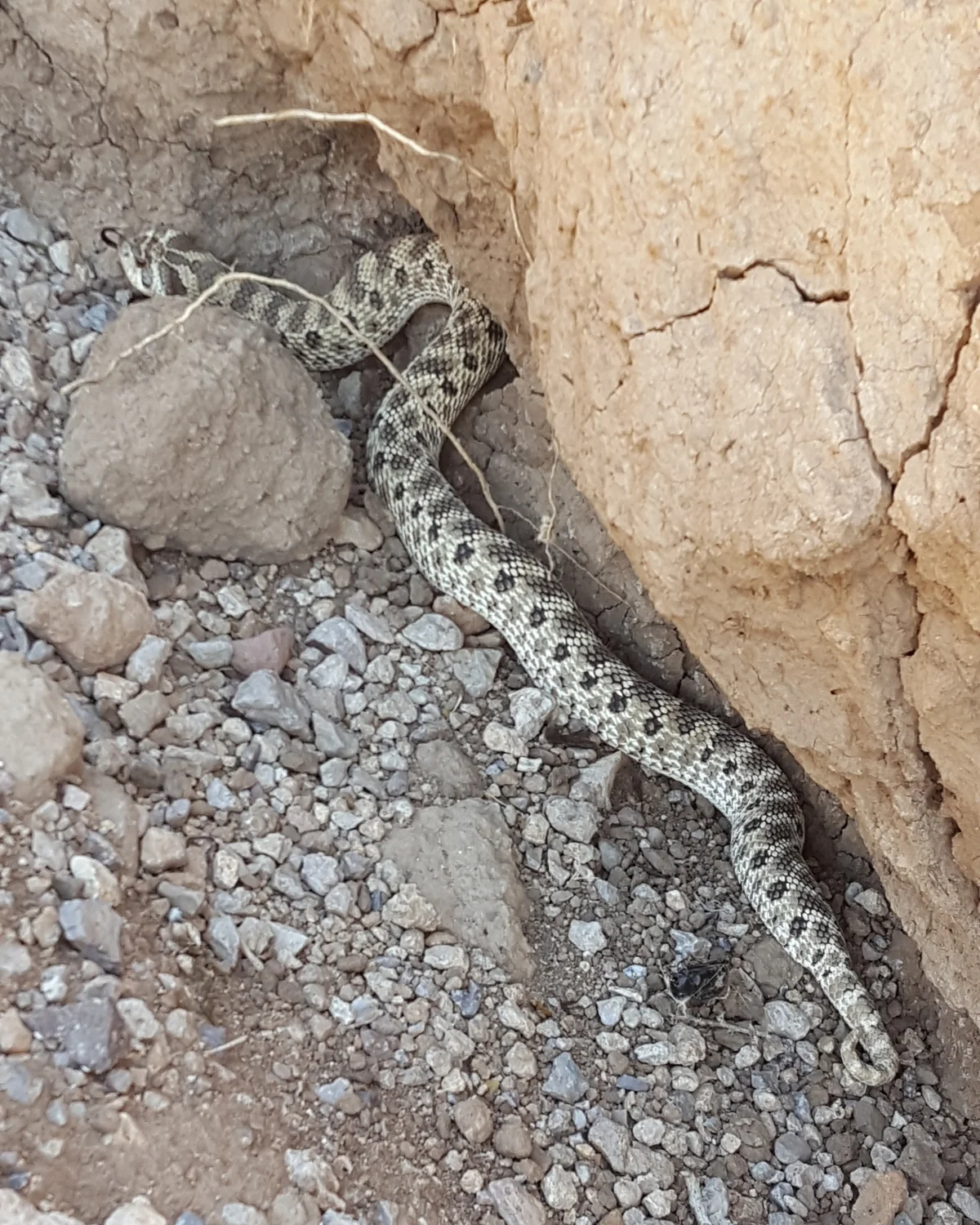
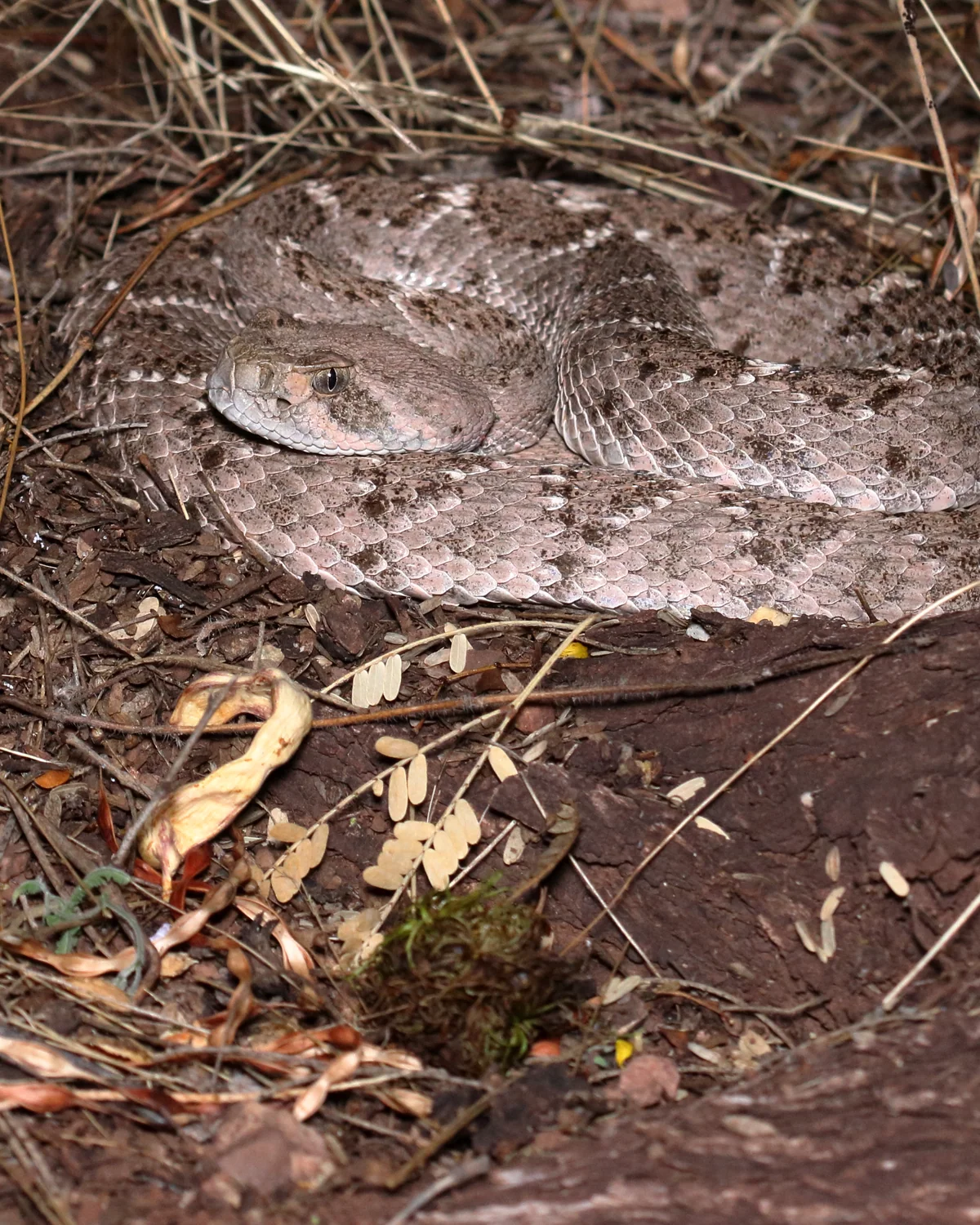
Western diamond-backed rattlesnake
Crotalus atrox — the rattlesnake most people around Apache Junction are actually meeting when they say they saw “a rattler.” Arizona is home to 13 rattlesnake species, more than any other U.S. state; the western diamondback is one of the four encountered most often, depending on location.
- Range in Arizona
- A habitat generalist, from below sea level up to about 6,500 feet, in desert, grassland, rocky hills, and beyond. The species ranges across the southwestern United States (including Arizona) and northern Mexico.
- Size
- The largest rattlesnake in the western U.S. National Park Service accounts put total length at 30–90 inches (about 2½–7½ feet). Adults are often around 4–5 feet; truly huge animals are unusual.
- Diet
- Mostly rodents, along with rabbits, lizards, birds, and nestlings. Like other pit vipers, they can locate warm prey with heat-sensing pits.
- Fun fact
- The rattle is made of keratin — the same family of material as hair and fingernails. A new segment is added when the snake sheds, not as a perfect year-counter. Males may also perform a ritualized “combat dance” in spring, wrestling upright before the loser crawls away.
If you meet one — or if it bites
Give it a wide berth and let it leave. Rattlesnakes are defensive, not pursuers; Arizona Game and Fish notes that most bites happen when someone tries to corner or capture a snake, and that more than half of bites are provoked by the person who was bitten.
If someone is bitten: call 911 and get to emergency care without delay. Stay as calm and still as is practical, take jewelry and tight clothing off the affected limb, and keep it still, below heart level.
Do not cut the wound or try to suck out venom, use ice, a tourniquet or constriction band, electric shock, alcohol, or “extractor” pumps — those steps don’t remove meaningful venom and can make tissue damage worse. Don’t try to catch the snake; treatment does not depend on bringing it in. For questions you can also call the Arizona Poison and Drug Information Center at 1-800-222-1222.
Sources
- Arizona Game and Fish Department, “Above average temps could bring out rattlesnakes,” Feb. 27, 2026 — 13 species in Arizona; encounter and bite first aid (call 911; no ice, incisions, tourniquets, alcohol, or shock).
- Arizona Poison and Drug Information Center, rattlesnake first aid — do not use suction or extractors; go to a medical facility immediately.
- CDC / NIOSH, venomous snakes first aid — do not slash the wound or try to suck out venom.
- National Park Service, Saguaro National Park, snakes — identification, 30–90 in. total length, diet.
- National Park Service, Organ Pipe Cactus National Monument, snakes — typical adult length 4–5 ft; equal-width black and white tail bands.
- Arizona-Sonora Desert Museum, rattlesnakes (Natural History of the Sonoran Desert) — habitat, diet, life history, combat behavior.
- Arizona-Sonora Desert Museum, Western diamondback fact sheet — often 3–5 ft, occasionally to about 7 ft; range.
- Arizona State Parks, Arizona wildlife — keratin rattles; diet note.